A cleaner kitchen.
Better choices.
Find commercial grease trap cleaning services, understand your local FOG rules and compare contractors with confidence. Built for restaurants and commercial kitchens.
Get the right service, not just a name.
Choose a city and service to start a structured quote request.
Independent directory. No booking or provider availability is guaranteed.
Everything you need to book
the right grease service.
From pump-outs to compliance records, navigate the operational details before committing to a vendor.
Know what happens
inside your grease trap.
Grease management protects building drains and public wastewater systems. Fats float, food solids settle and cleaner water leaves through the outlet—until buildup or faulty components interfere with separation.
- Locate the device and confirm its type
- Monitor buildup with the right inspection practices
- Use approved pumping and waste-disposal services
- Store accurate service records
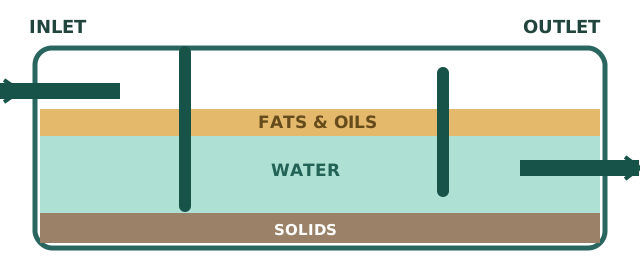
Original educational diagram. Layout varies by device and manufacturer.
From problem to
better provider choice.
Three simple steps to a clearer service request.
Understand your system
Identify trap vs interceptor, capacity and your local obligations.
Compare like for like
Check hauling authorization, pump-out scope, manifests and available schedules.
Request clear quotes
Share access, urgency and last service details to reduce surprises.
Start with your city.
Regulatory details and provider lists are different in each service area.
Chicago
Restaurants, institutional kitchens and hospitality operations across Chicagoland need reliable grease control and documented service.
View local service guide →Miami
Miami-Dade kitchens may need FOG discharge operating permits, documented pumping and proper waste transport.
View local service guide →Dallas
Dallas food operations can compare local grease trap pump-out providers and plan cleaning around a 90-day / 25% threshold.
View local service guide →San Antonio
San Antonio operators can use local grease-management guidance and compare recurring pumping options.
View local service guide →Tampa
Tampa has detailed grease management rules, including trap inspection and interceptor cleaning triggers.
View local service guide →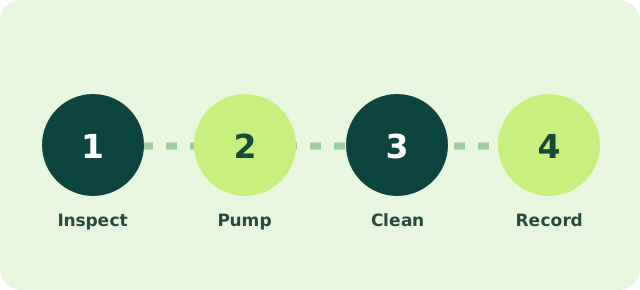
Four stages to clarify with every prospective contractor.
Compare the work.
Not just the price.
A strong bid should specify whether the supplier inspects, fully pumps, cleans and documents the work. It should also clarify travel, disposal, emergency and access fees.
Compare provider profiles ↗Use our 12-point buyer checklist →Make your next service
decision easier.
Practical planning aids, designed to show their limitations rather than promise false precision.
Service Budget Planner
Explore illustrative pump-out budgets based on capacity, access and urgency.
Explore →Cleaning Frequency Planner
Review your site inputs alongside jurisdiction-specific constraints.
Explore →Provider Hiring Checklist
Walk through qualifications, service scope, documentation and scheduling.
Explore →Most-read operational guides.
How Often Should a Grease Trap Be Cleaned?
There is no safe national cleaning interval for every restaurant. The right answer depends on how quickly fats, oils and solids accu…
Explore →Grease Trap Cleaning Cost: What Actually Changes the Quote?
Two grease traps can be quoted very differently. Size, accessibility, haul distance, disposal, condition and service urgency are oft…
Explore →Grease Trap Rules by City: What Restaurant Owners Need to Check
Grease requirements can change at city, county and utility boundaries. A multi-location operator should keep a separate FOG complian…
Explore →